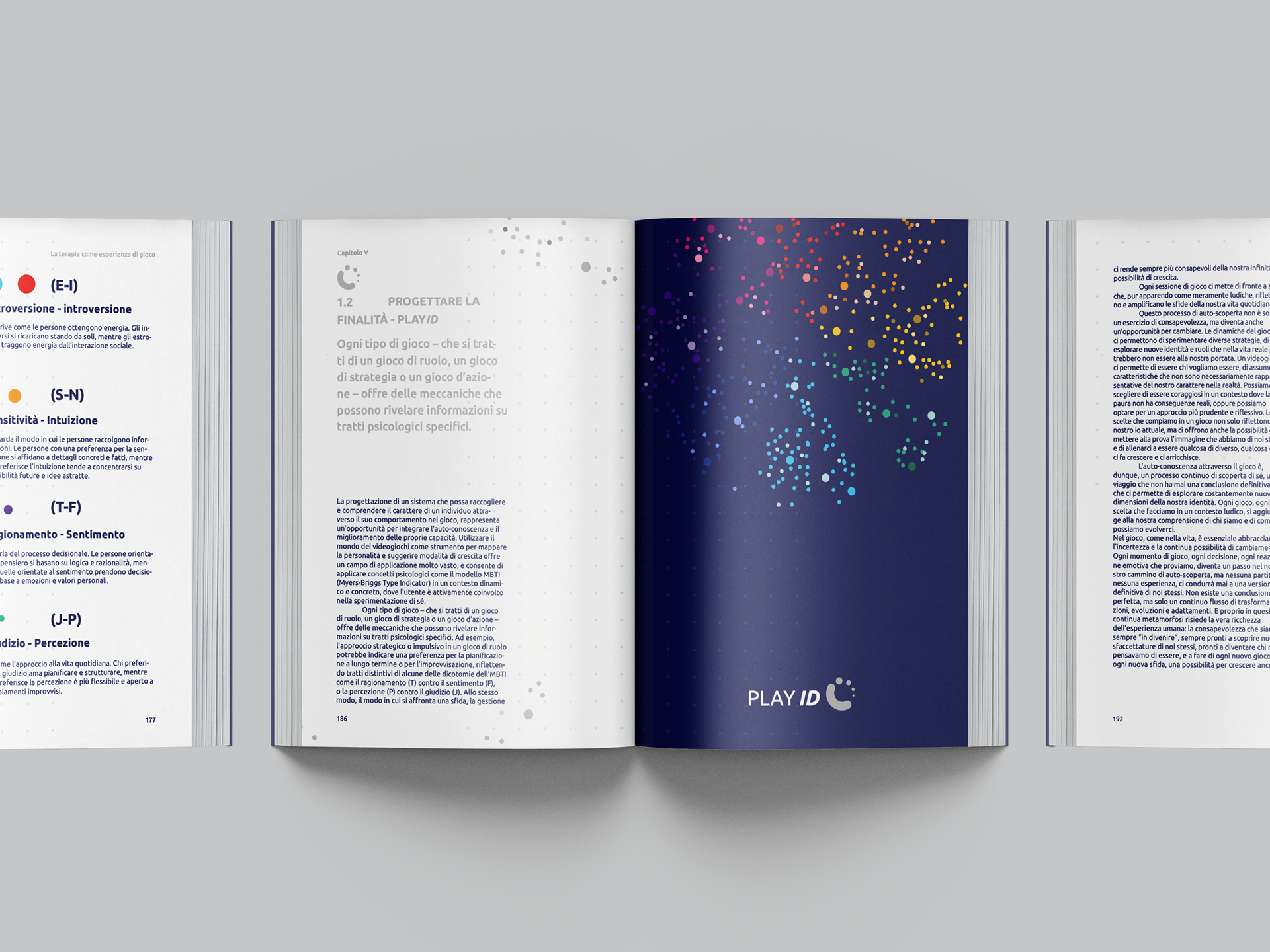
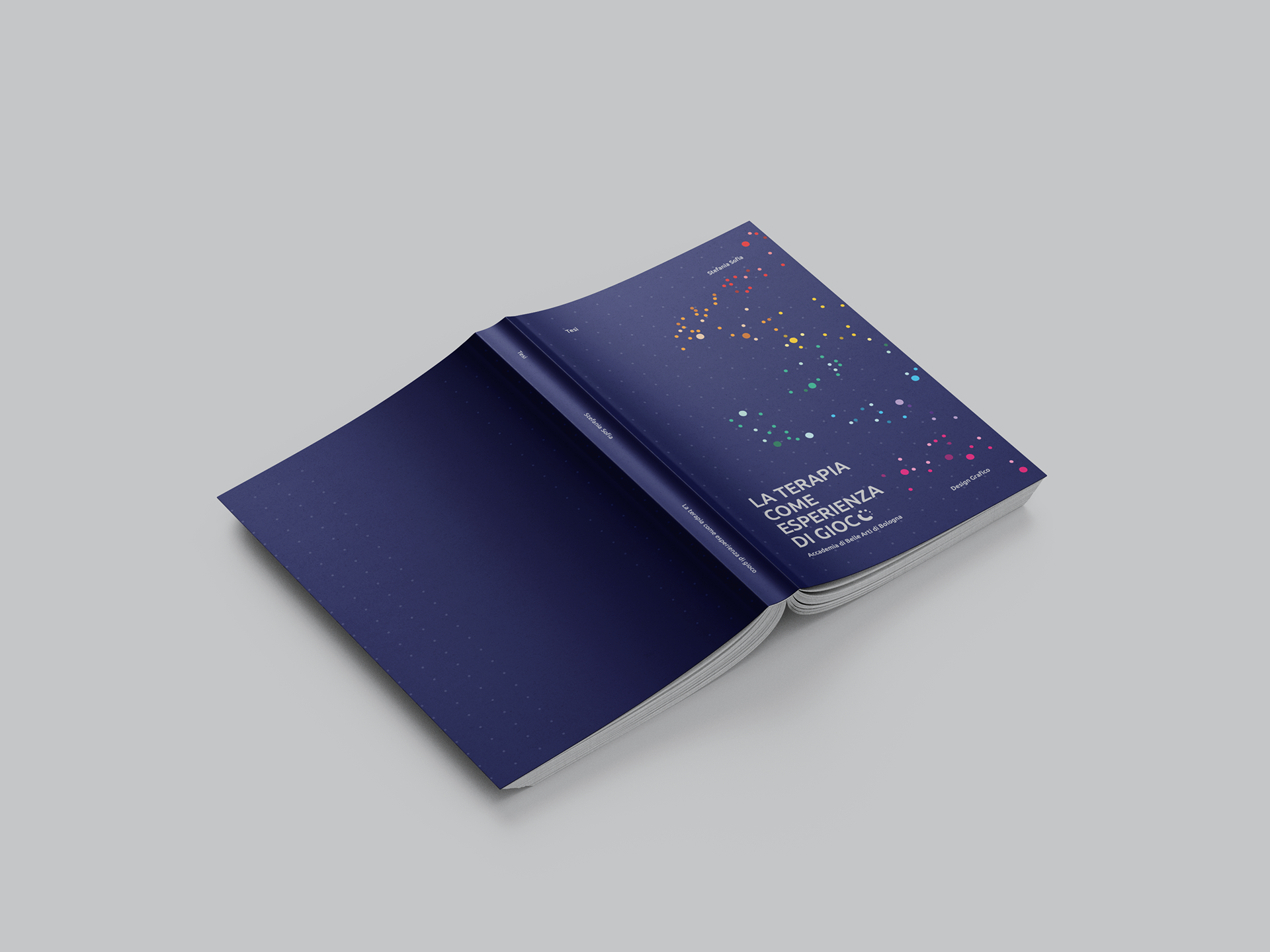
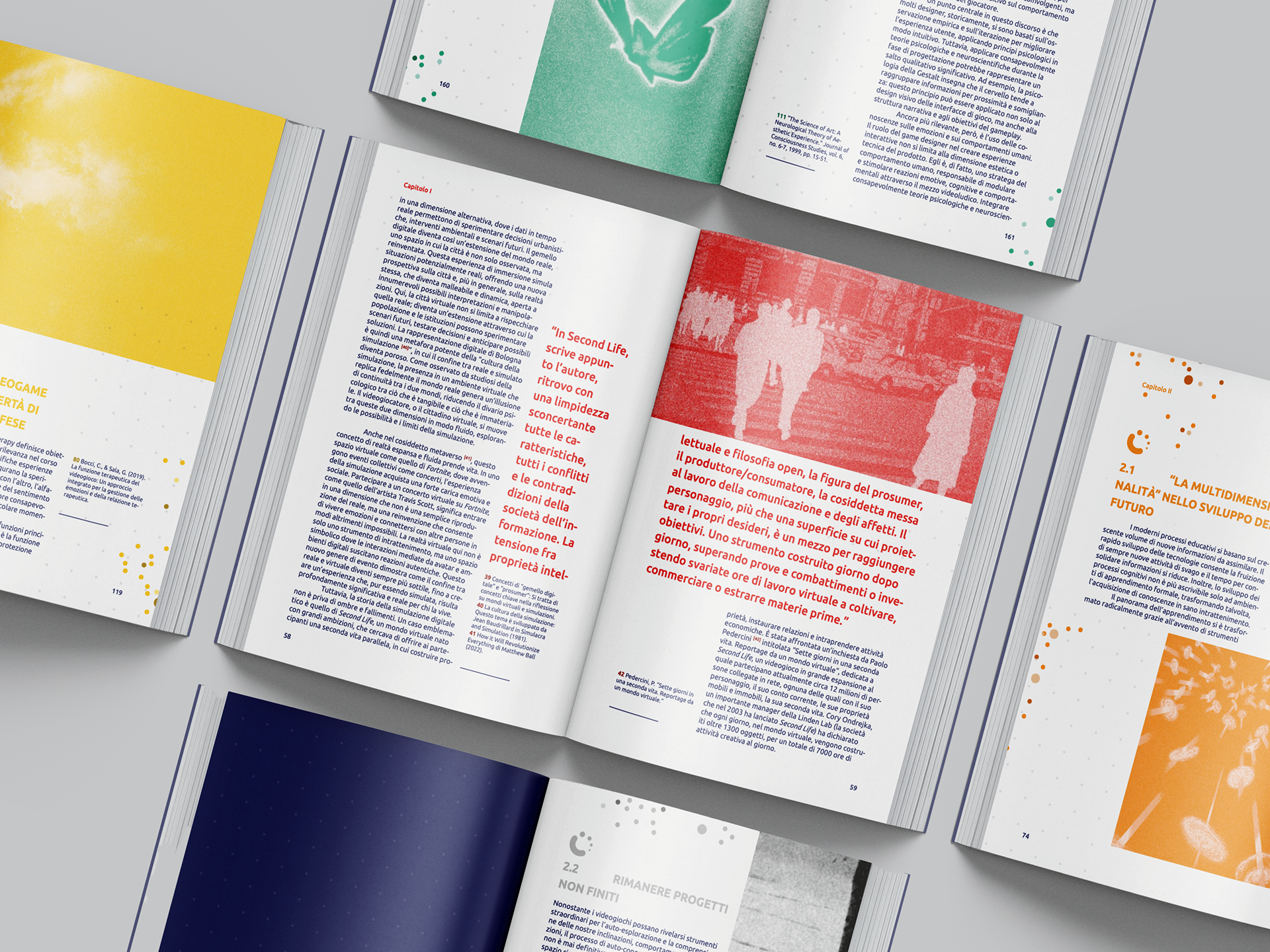
This thesis explores video games as cultural, narrative, and design-driven media that go beyond entertainment, becoming tools for self-exploration and psychological well-being. Through an analysis of the historical, social, and cultural evolution of video games, the research investigates their impact on collective imagination, interpersonal relationships, and identity formation. Particular attention is given to serious games and videogame therapy, highlighting how gameplay, storytelling, and the flow state can foster introspection, emotional engagement, and personal growth.
The project concludes with a design-oriented reflection on game experience design as a language capable of creating safe, immersive, and personalized spaces, where players can explore their identities, choices, and emotions through play.


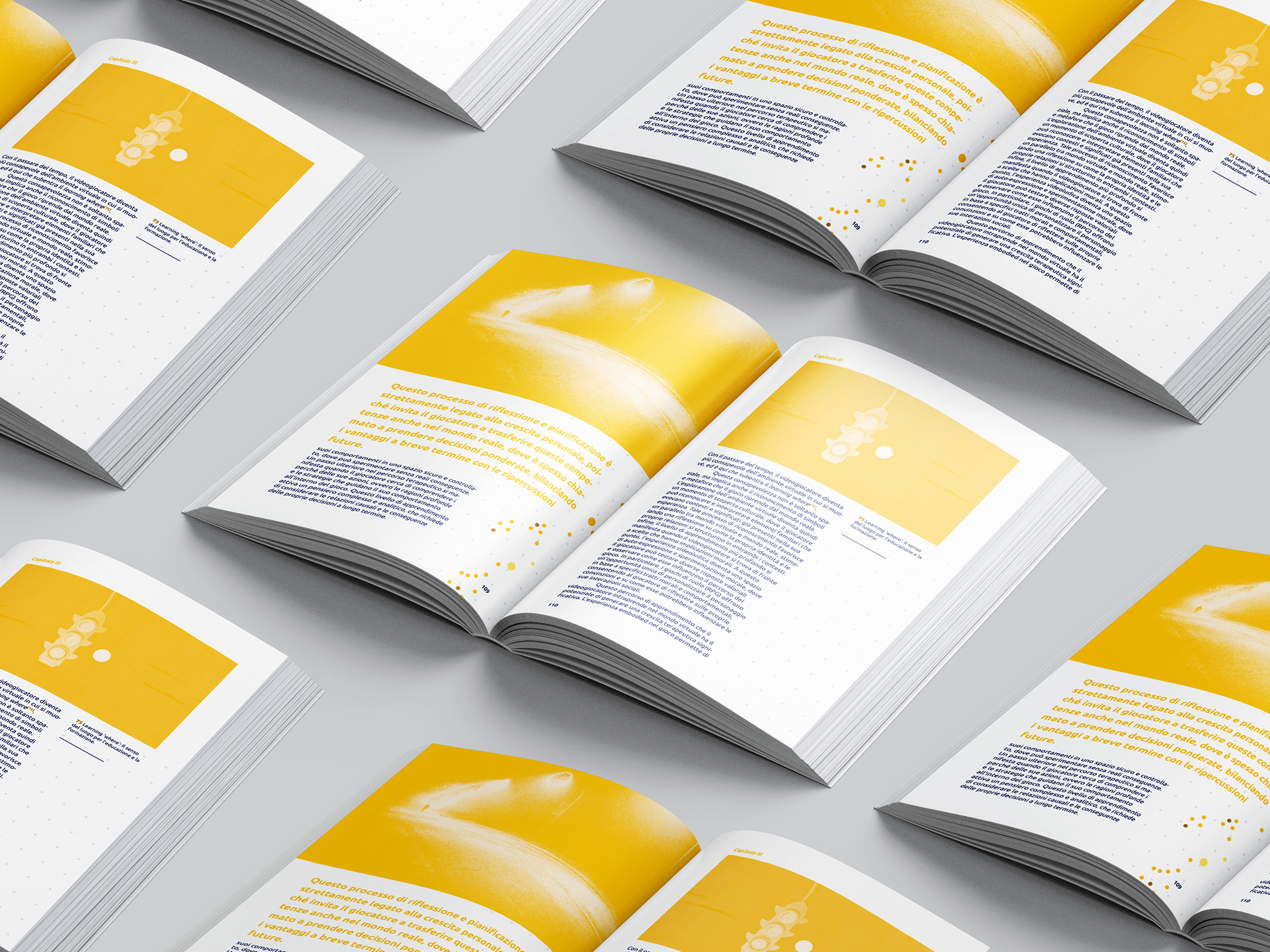
PLAYID
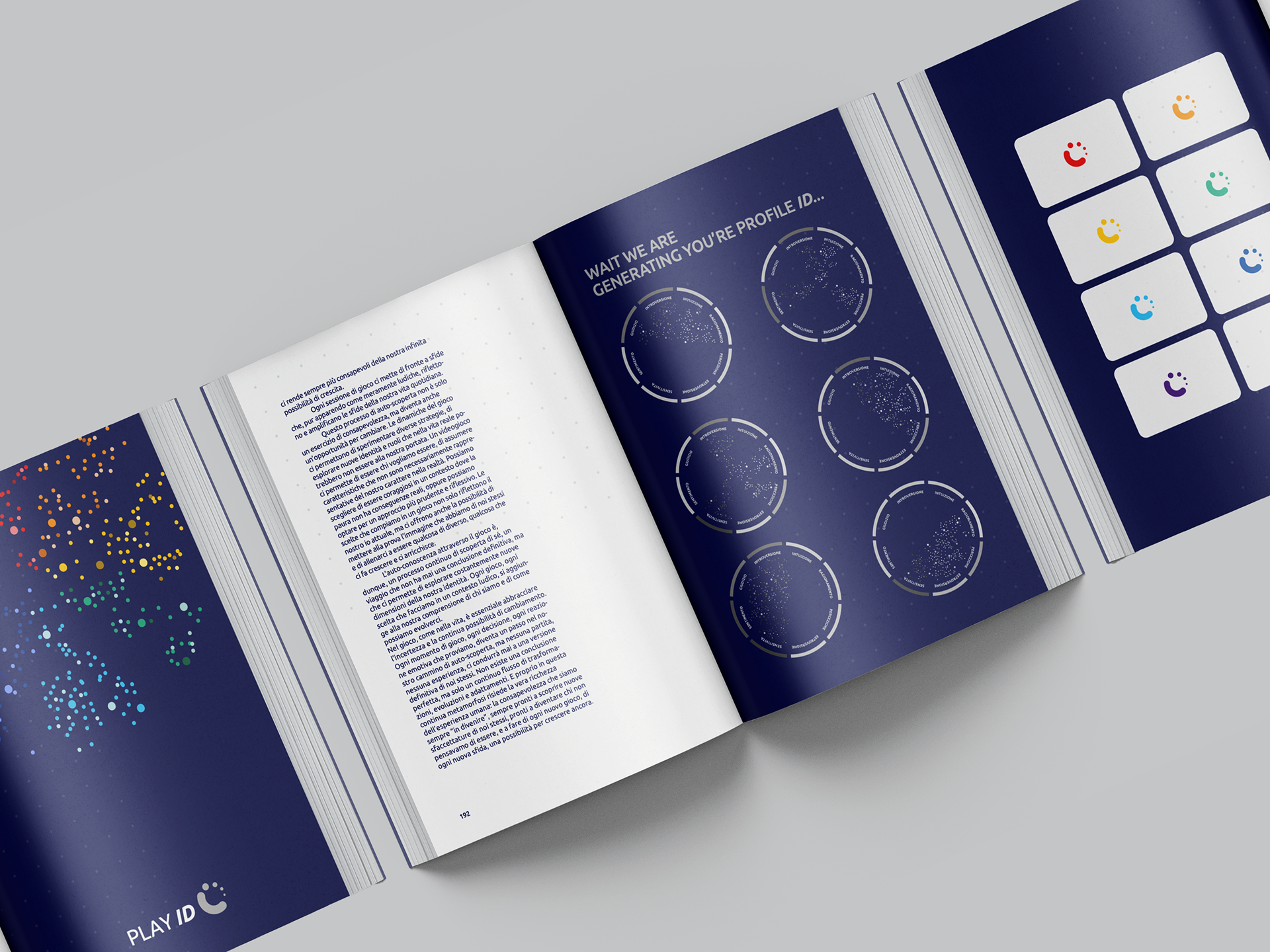
At the core of the project lies PLAYID, a speculative design concept that frames identity as an evolving, playable system. PLAYID uses game mechanics, narrative choices, and interactive mapping to visualize personal behaviors, decisions, and emotional patterns over time. By transforming self-knowledge into an interactive experience, PLAYID proposes play as a therapeutic and reflective space, where users can explore who they are, who they might become, and how their choices shape their personal trajectories.